
Aircraft and system context
Retain the reason behind the requirement.
Connect aircraft intent to system requirements, interfaces and implementation assumptions. Keep the source, rationale and responsible discipline with each record.
Aviation
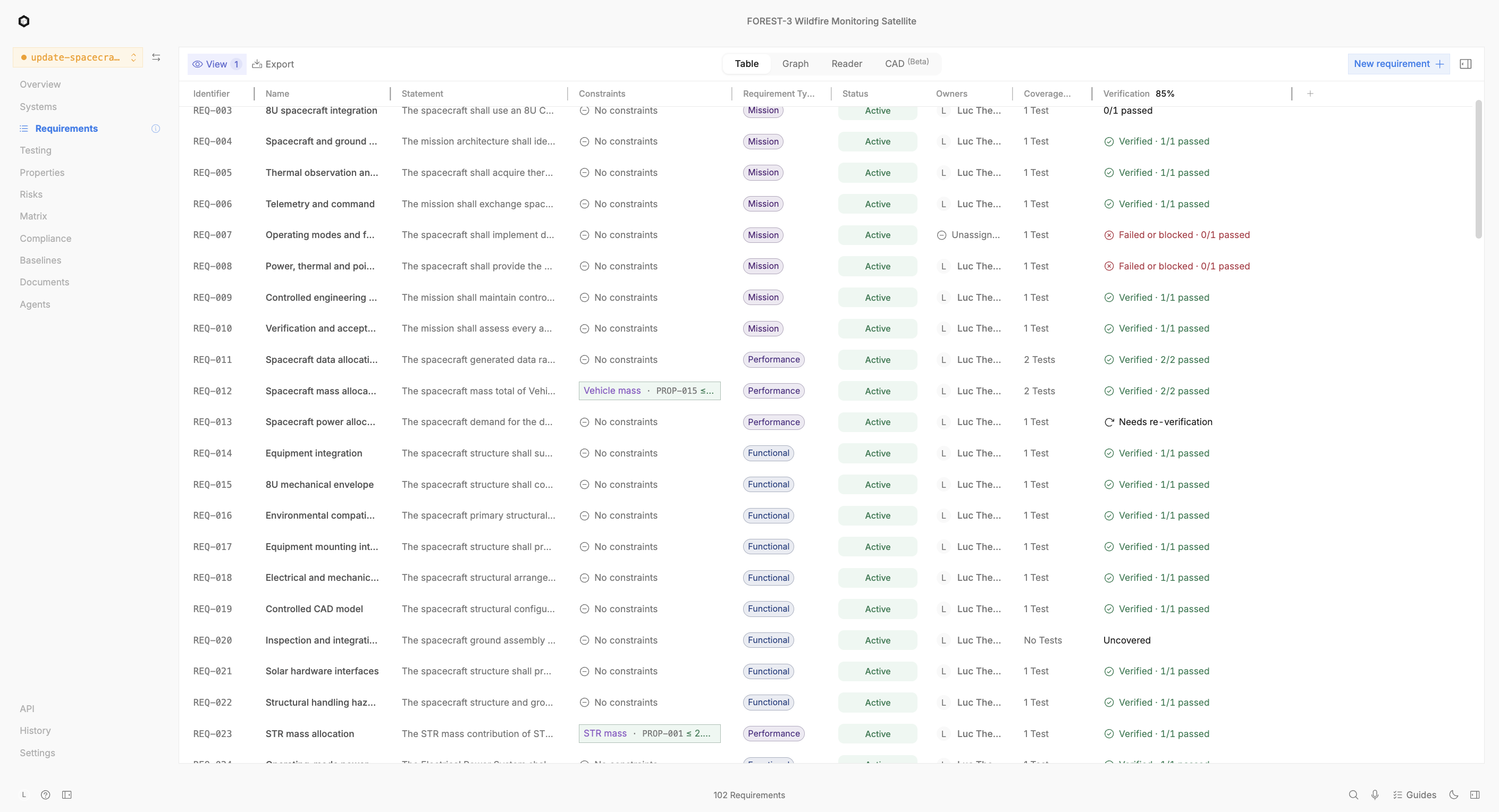
Connect aircraft and system requirements to design decisions and verification evidence. Keep assurance work tied to the configuration it assesses.
02Engineering challenges
Aircraft, system, software and hardware teams contribute different parts of the review.
Aircraft intent needs to remain connected to system requirements, implementation decisions and the verification that addresses it.
A message or interface update can alter software, hardware and supplier assumptions that need joint assessment.
Assurance reviewers need the requirement revision, hardware and software state and conditions represented by each result.
03How Arc helps
Bring requirements, implementation assumptions and verification evidence into a connected engineering record.
Connect aircraft intent to system requirements, interfaces and implementation assumptions. Keep the source, rationale and responsible discipline with each record.
Trace an interface update into the affected system and software requirements, electronic-hardware assumptions and verification work before acceptance.
Agents help check requirement quality, trace dependencies and flag verification gaps. Engineers assess the finding and proposed action in the programme’s assurance context.
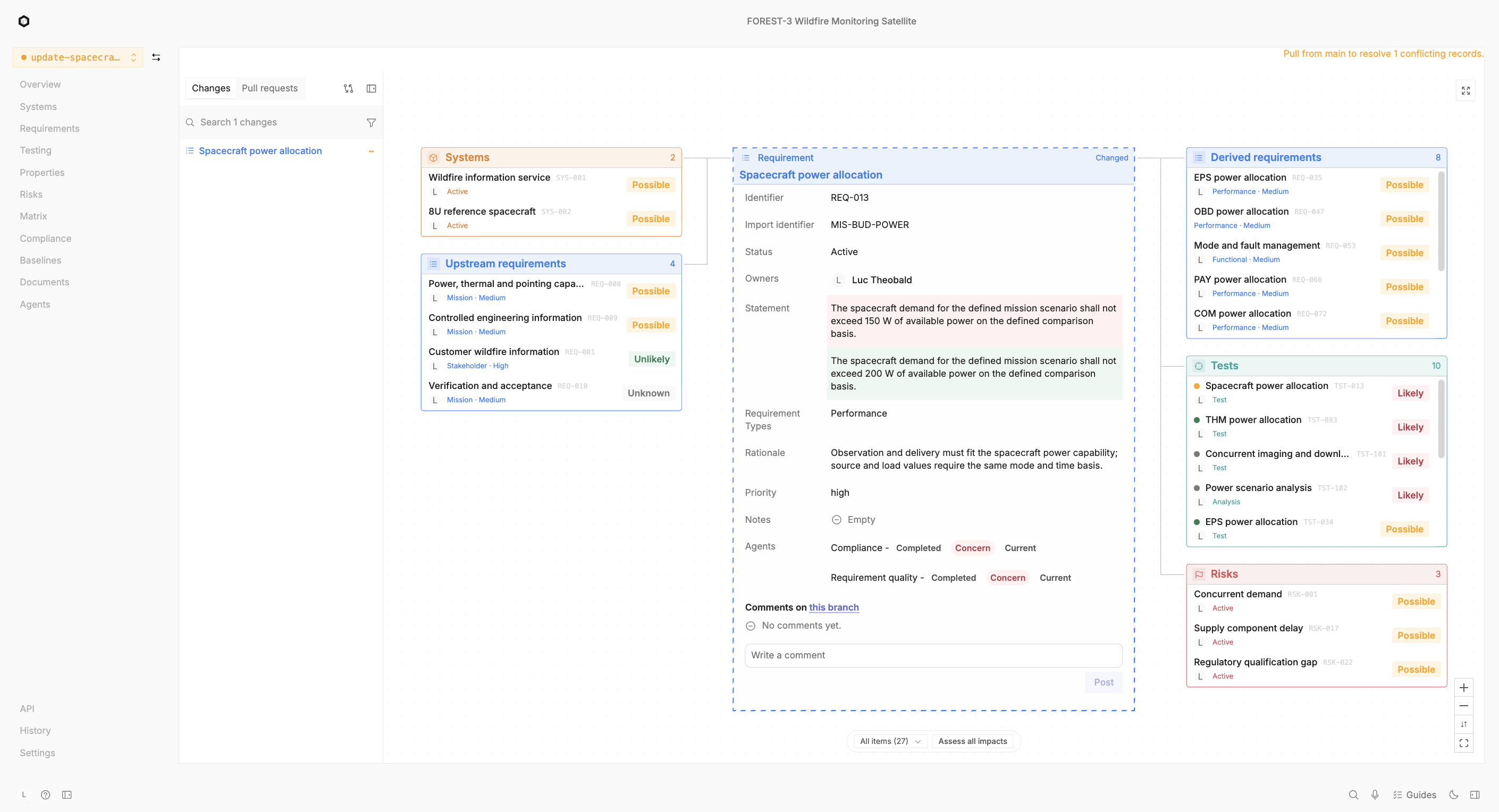
Connect each requirement to its procedure, evidence and hardware or software state. Retain pending applicability decisions when the candidate aircraft system changes.
Bring system, software, hardware and verification owners into the same branch review. Keep the programme baseline distinct from the configuration represented by each result.
04Standards and assurance scope
Select the standards and guidance agreed for aircraft and system development, safety assessment, software, electronic hardware and airworthiness security.
Connect technical and process obligations to requirements, discipline owners, reviews and assurance evidence. Monitor and report their status under the invoked editions, contract or certification basis, agreed tailoring and responsible acceptance authority.
The certification basis or contract determines invoked editions and required evidence. Linking records or citing guidance does not establish compliance, certification or tool qualification.
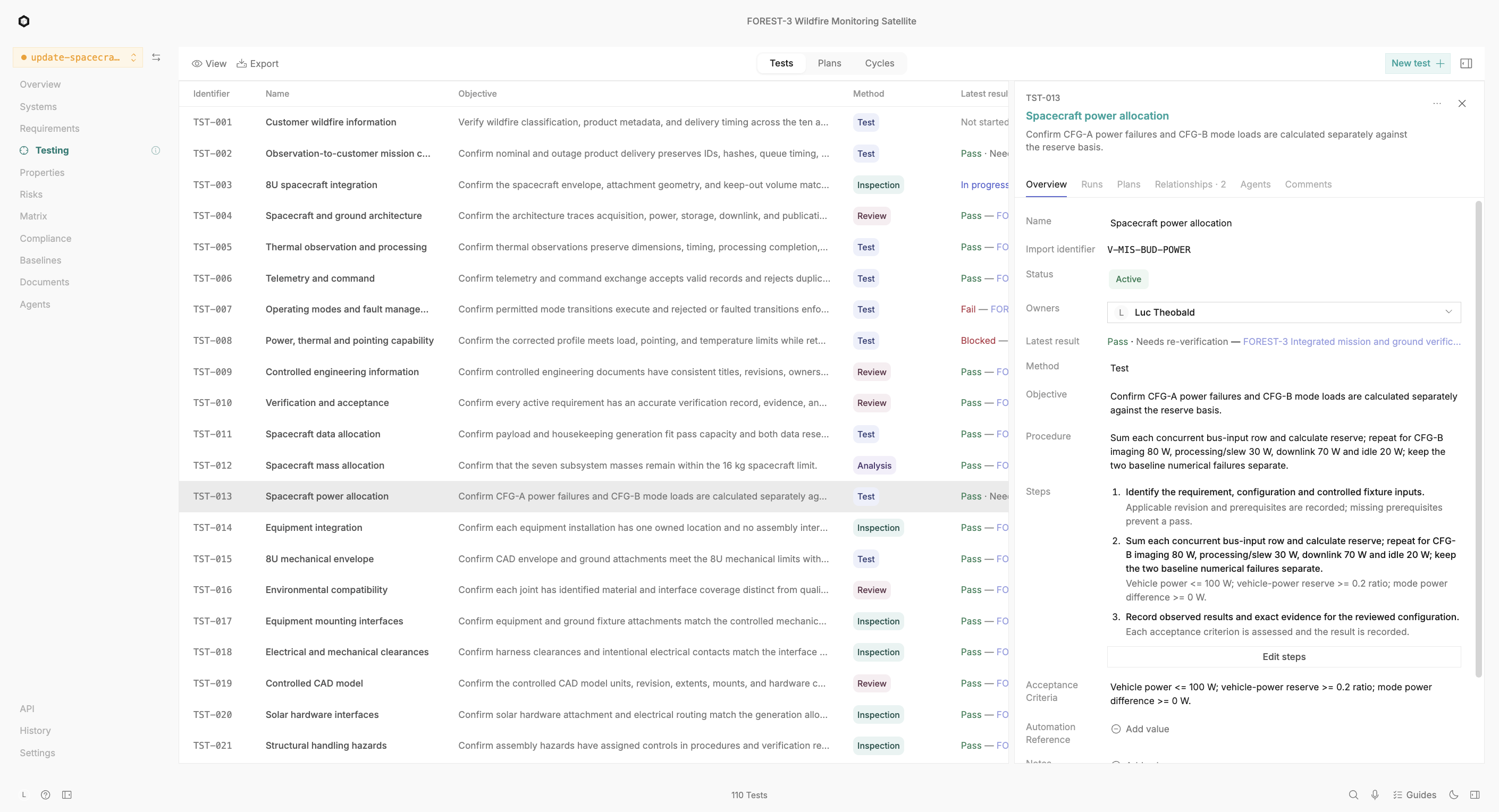
Keep system, software, hardware and supplier revisions with the assurance evidence they inform. Use supported API operations with agreed mappings, permissions and engineer review, retaining the requirement, procedure and assessed configuration.
05FAQ
Arc connects aircraft and system requirements, design decisions, interfaces, software and electronic-hardware references and verification evidence. Sources, revisions and owners provide context for multidisciplinary review.
Trace the proposed interface or requirement change into connected system requirements, software requirements, hardware assumptions and verification records. Reviewers assess the dependencies together while retaining each discipline’s responsibility.
Keep their scopes distinct. SAE ARP4754 addresses aircraft and system development assurance, ARP4761 safety assessment, DO-178C airborne software, DO-254 airborne electronic hardware and DO-326A airworthiness security. Arc connects invoked obligations, requirements and evidence under the editions agreed with the programme and relevant authority.
Retain the requirement revision, procedure, hardware and software configuration and conditions assessed. The responsible reviewers determine what the evidence still supports and what needs further verification for the candidate design.
Use a connected record with source revisions, allocations and discipline owners. Review proposed work on a branch and retain the agreed baseline. A multidisciplinary review does not make software and hardware a derivation hierarchy. Requirements validation assesses intended needs, while implementation verification assesses whether the design satisfies them.
Agents help inspect requirement quality, trace dependencies and flag evidence gaps. Engineers review the sources and proposed actions. Approval and assurance decisions remain with the programme’s responsible reviewers and authorities.
Supported API operations can connect engineering references through agreed mappings, permissions and review. Customer-owned AWS or Azure deployment and supported AI-provider keys are available under an agreed setup. Confirm the programme’s access and processing requirements.
A demo can follow an aircraft-system requirement through an interface change, affected discipline records and verification-evidence review. Book a demo to discuss the assurance workflow relevant to your team.
06Engineering resources
See how requirements, discipline decisions and verification evidence stay connected through assurance review.