
Requirements and component context
Keep the reason for the work visible.
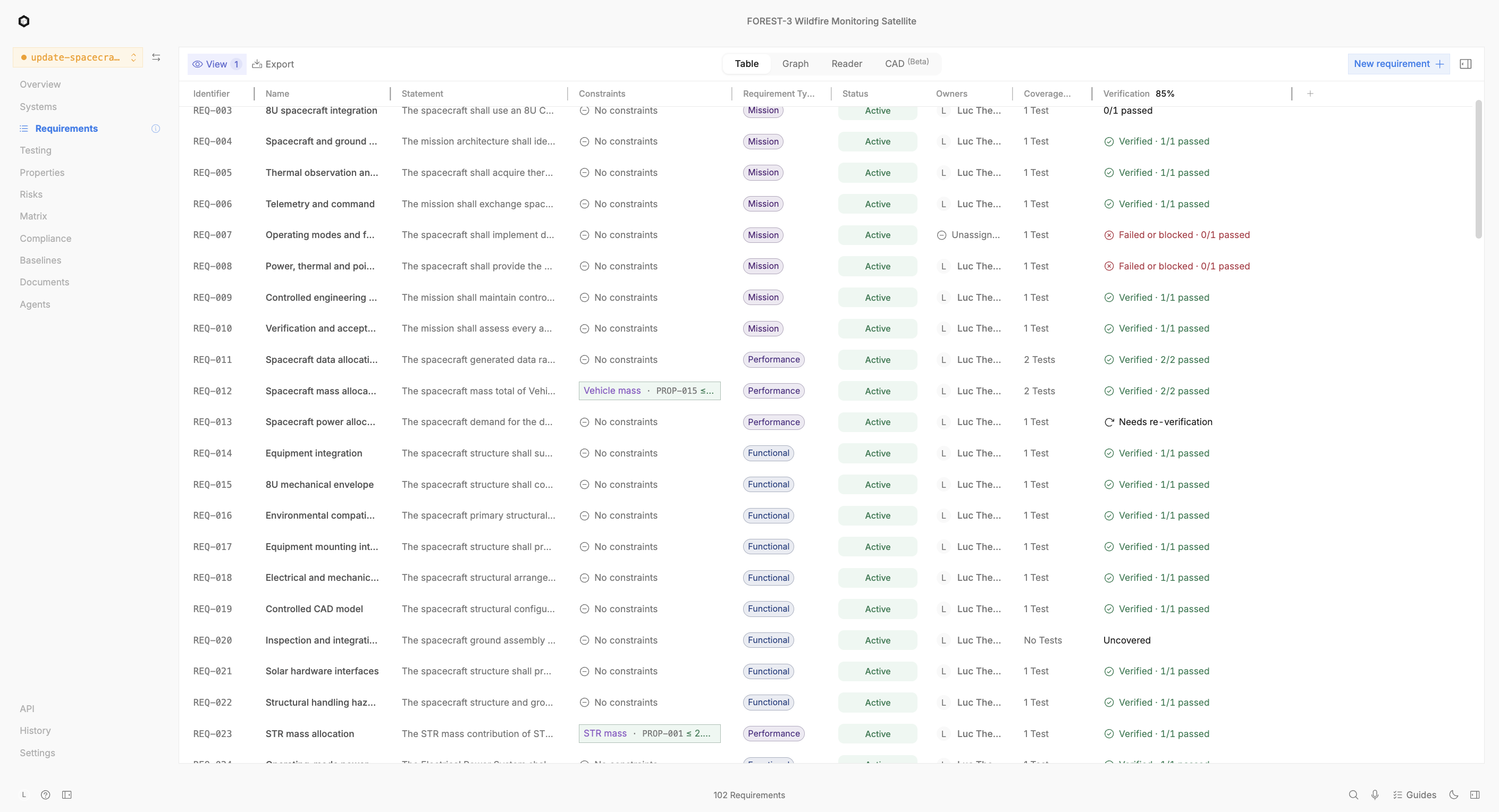
Connect requirements to their source needs, acceptance conditions and component interfaces. Retain the rationale and owner alongside delivery references.
Software
Connect software requirements, component interfaces and release evidence. Review the effect of code and contract changes against the intended behaviour.
02Engineering challenges
Completed tickets and passing tests need a connection to the behaviour the release should deliver.
Delivery items need to retain the source need, rationale and acceptance conditions behind the implementation.
A changed response can affect consumers in other repositories. Compatibility assumptions need an explicit review.
A passing result needs requirement, revision and environment references to show which release behaviour it verifies.
03How Arc helps
Keep requirement intent, component assumptions and verification evidence together as the software changes.
Connect requirements to their source needs, acceptance conditions and component interfaces. Retain the rationale and owner alongside delivery references.
Follow a response or component-interface change into dependent requirements and integration tests. Review compatibility assumptions before accepting the candidate behaviour.
Agents help check requirements, trace dependencies and flag evidence gaps. Engineers inspect the sources and decide which proposed updates to accept.
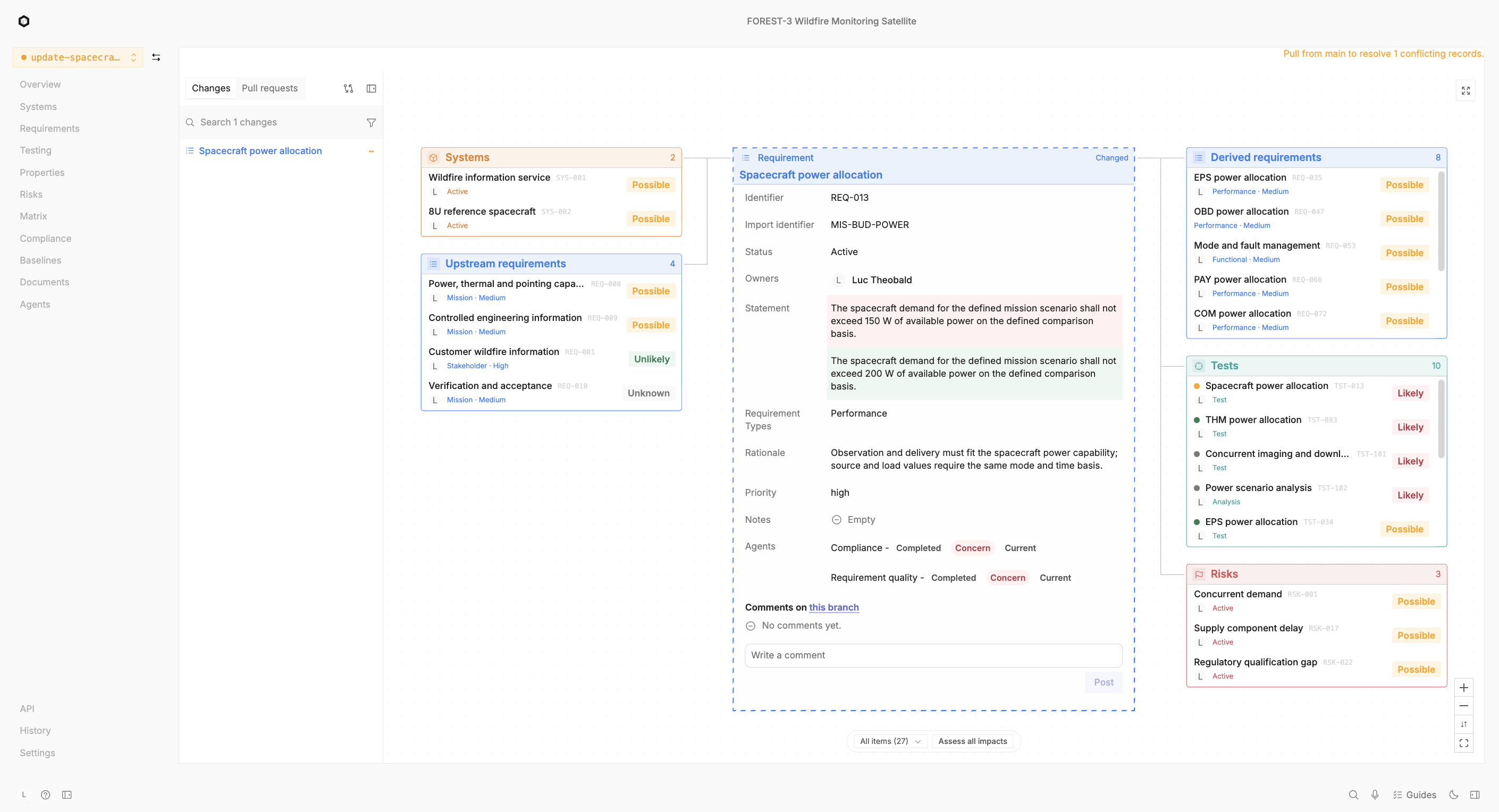
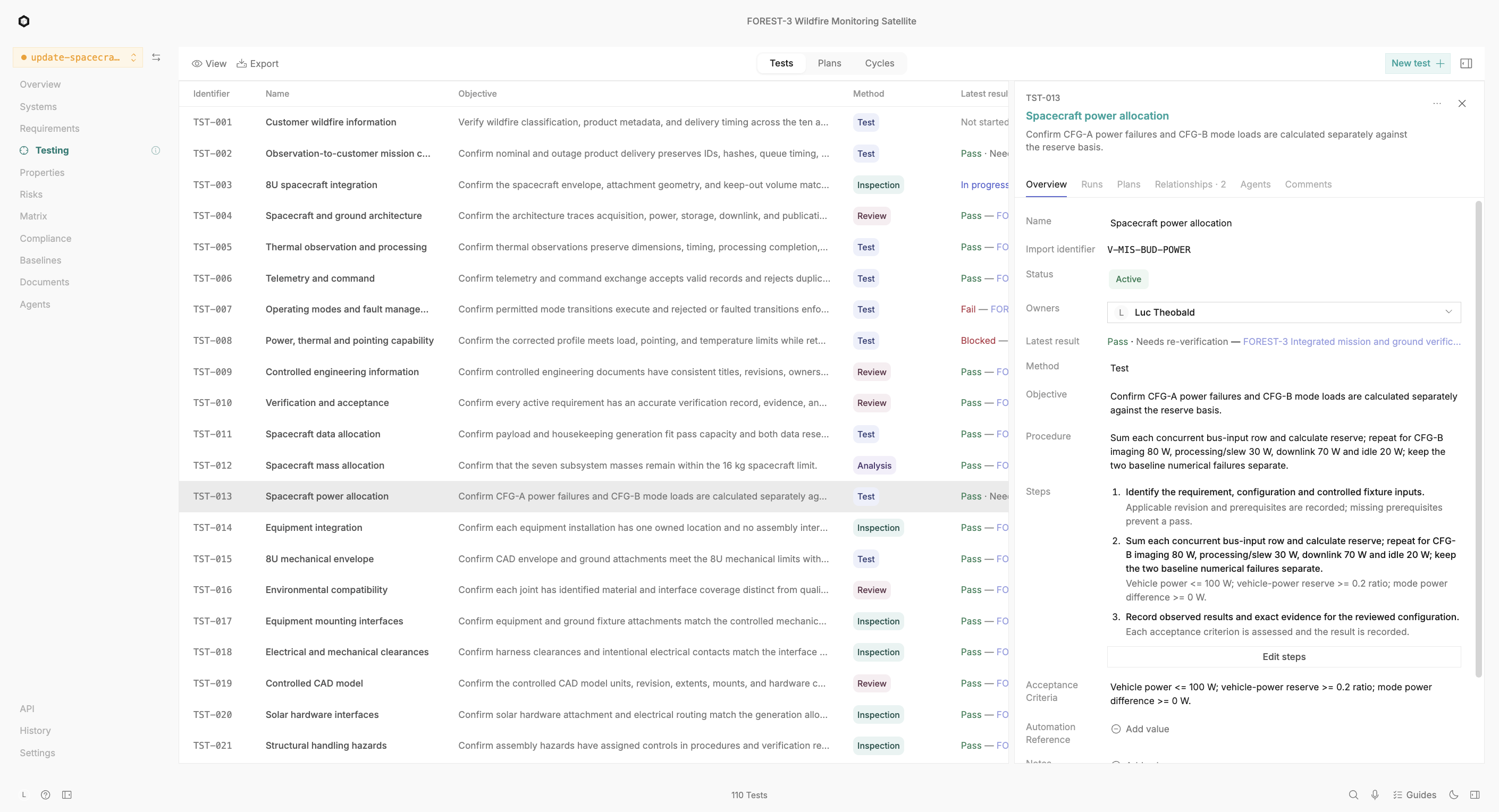
Retain the requirement revision, repository reference and test environment with the result. Identify which release evidence is present and what remains pending.
Bring component, integration and verification owners into the candidate branch. Keep the accepted baseline and pending release decisions identifiable.
04Standards and assurance scope
Select the standards and guidance for the software’s intended use, including ISO/IEC/IEEE 29148 requirements engineering and any invoked assurance obligations.
Connect technical and process obligations to requirements, owners, reviews and release evidence. Monitor and report their status against the governing editions, contract scope, agreed tailoring and responsible acceptance authority.
Traceability organises evidence. It does not establish compliance. A linked result needs assessment against the requirement revision and configuration it represents.
Your repository continues to own source code. A custom integration can propose supported records and evidence references through the API with agreed mappings, permissions and review. Retain the component, source revision and release environment behind each result.
05FAQ
Arc connects software requirements, source needs, component interfaces, proposed changes and release evidence. Repository and delivery references can retain their authoritative owners while the requirement and review context stays connected.
Trace the proposed contract change through dependent component requirements, compatibility assumptions and integration tests. Review the candidate behaviour and pending evidence before accepting a release decision.
ISO/IEC/IEEE 29148 addresses requirements-engineering processes and information items across systems and software. Arc can connect behaviour, constraints, source needs and acceptance context to verification records. Additional assurance obligations depend on the intended use and invoked standards.
A passing result applies to the revision, configuration and environment assessed. Connect it to the requirement and acceptance conditions it addresses, then review missing coverage or applicability after a change.
Your repository continues to own source code and the issue tracker can remain the delivery record. Arc connects requirements, interfaces and review evidence through supported references with agreed mappings and ownership.
Engineers review the sources, finding and proposed action before accepting changes. Agents help inspect requirements and evidence gaps, while the release decision remains with the responsible owners.
A custom integration can propose supported records and evidence references through the API with agreed mappings, permissions and review. Customer-owned AWS or Azure deployment and supported AI-provider keys are available under an agreed setup.
A demo can follow a software requirement through a component-contract change, dependent tests and pending release evidence. Book a demo to discuss your requirement, integration and release-review workflow.
06Engineering resources
See how intended behaviour, component changes and release evidence stay connected through review.