Skip to content
Generic tokamak fusion system in an elevated three-quarter cutawayOriginal conceptual illustration of a toroidal vacuum vessel wrapped by D-shaped magnetic coil casings, five external poloidal ring assemblies, six stacked central solenoid modules, support pedestals and a recessed diagnostic port. The front quadrant is open to reveal the vessel wall and interior. The geometry is illustrative and does not depict a specific fusion machine or a fabrication plan.

Energy

Requirements management for energy teams.

Connect system requirements, architecture and verification evidence from prototype to commissioning. Trace the impact of engineering changes with the teams responsible for the system.

Fusion · Energy storage · Hydrogen · Power hardware

02

Keep the design, requirements and evidence in step.

Energy-system changes reach across thermal, electrical, mechanical and control disciplines.

  1. Changes cross system boundaries

    A revised duty cycle can change cooling demand, electrical limits, mechanical interfaces and control assumptions.

  2. Supplier context gets scattered

    Revised supplier interfaces need their source revisions, models and design decisions connected for review.

  3. Evidence belongs to an earlier design

    A result needs the requirement revision, configuration and operating conditions it actually assessed.

03

Keep engineering connected from prototype to plant.

Connect requirements, design changes and verification evidence for energy-system review. The screenshots show the genuine Arc FOREST-3 demo; the Energy cooling review in the copy is fictional.

Energy system and operating context

Put requirements in system context.

Connect requirements for fusion, energy storage, hydrogen and power hardware to thermal, electrical, mechanical and control systems. Keep operating conditions, supplier interfaces, source revisions and responsible owners with each record.
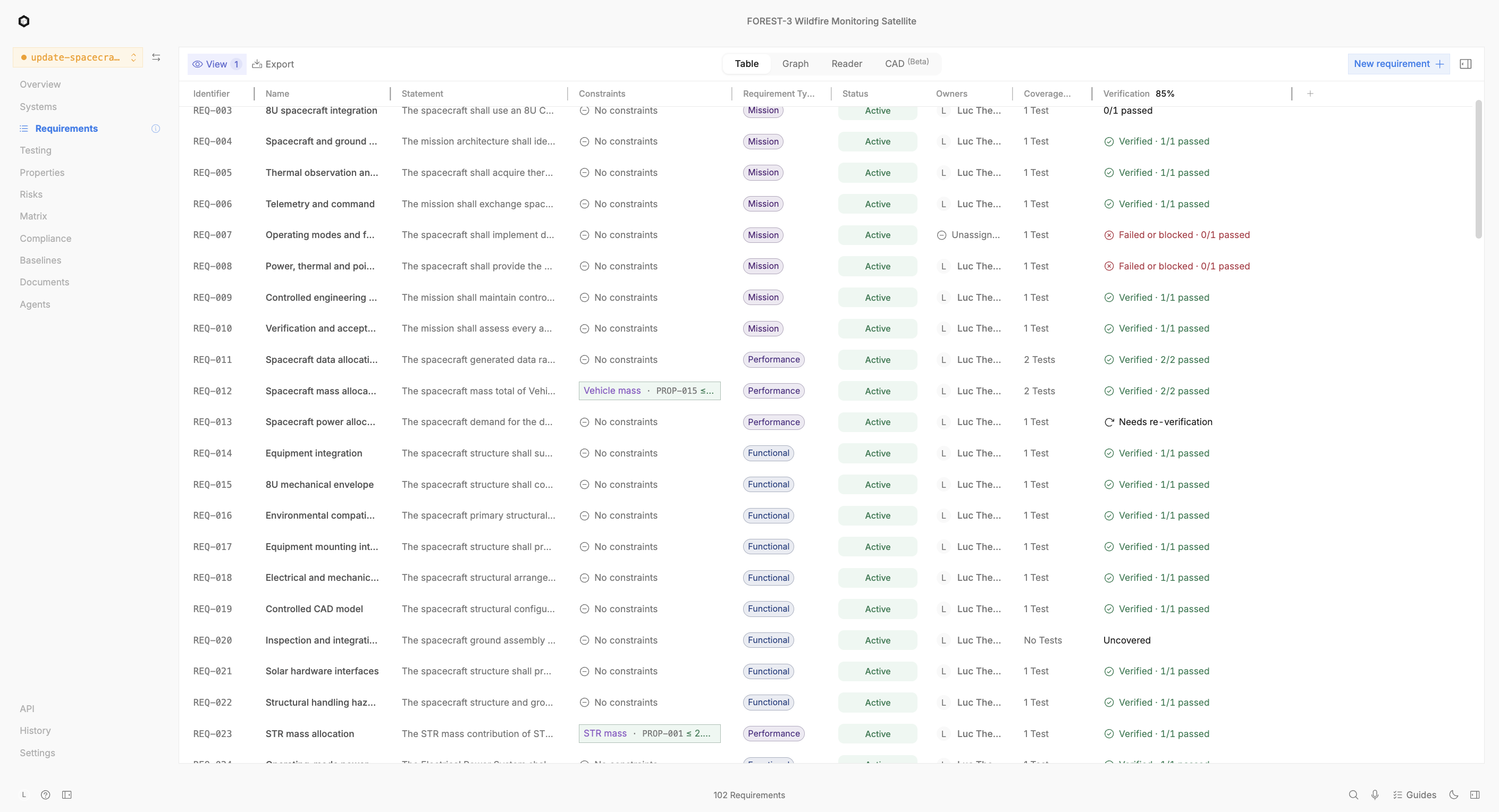
Arc FOREST-3 demo requirements table with REQ-013 marked Needs re-verification
Arc FOREST-3 demo. REQ-013 has a candidate change from 150 to 200 W and is marked Needs re-verification.

Design changes and agents

Trace what a duty-cycle change affects.

Trace duty-cycle changes through discipline requirements and supplier interfaces. In the fictional Energy review, the proposed cooling demand for EN-COOL-014 Rev A rises from 180 to 220 kW. Capacity remains 240 kW; nominal margin falls from 60 to 20 kW. Engineer review pending. Nominal capacity alone does not demonstrate cooling performance at the proposed operating conditions; evidence remains pending.

Prepare proposed work from the sources.

Agents examine available requirements, interfaces and evidence, surface gaps and draft proposed work within configured permissions. Engineers inspect the sources, findings and proposed actions, resolve open questions and approve what enters the accepted record.

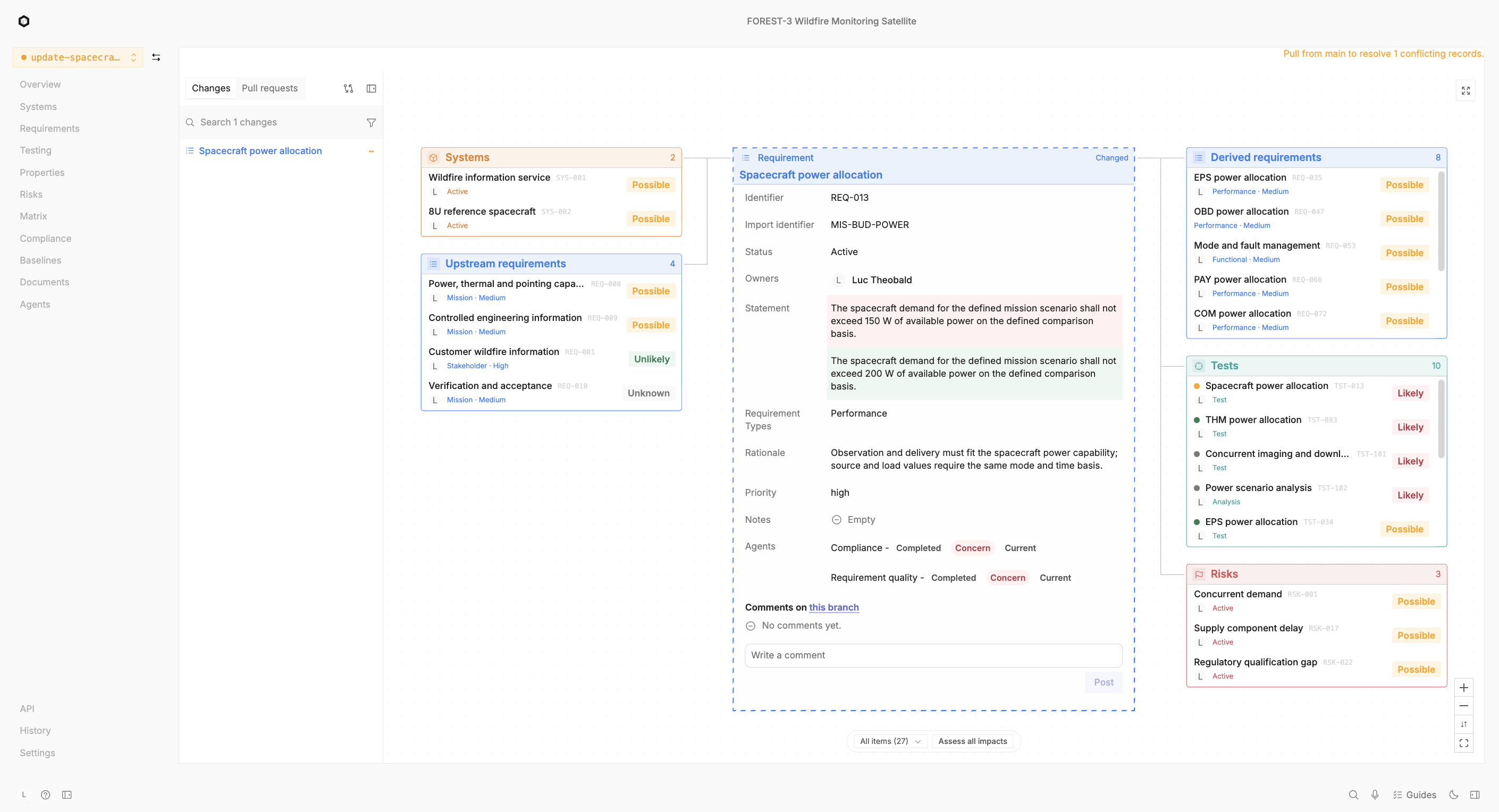
Arc FOREST-3 demo impact analysis showing a proposed branch and conflict notice
Arc FOREST-3 demo. The impact view shows an unapproved branch and a conflict notice for review.

Evidence and commissioning review

Keep evidence tied to the assessed design.

Link the requirement revision, procedure and assessed operating conditions to each result. In the fictional Energy review, EN-COOL-014 Rev A links to candidate CFG-EN-B and PROC-COOL-02. Result: Pending; no rerun recorded. The responsible engineer reviews evidence applicability before commissioning acceptance.

Review the branch with system and supplier owners.

Bring thermal, electrical, mechanical, control, supplier and verification owners into the proposed branch. Retain the accepted programme baseline and the configuration behind each result. Merge agreed changes after engineer approval.

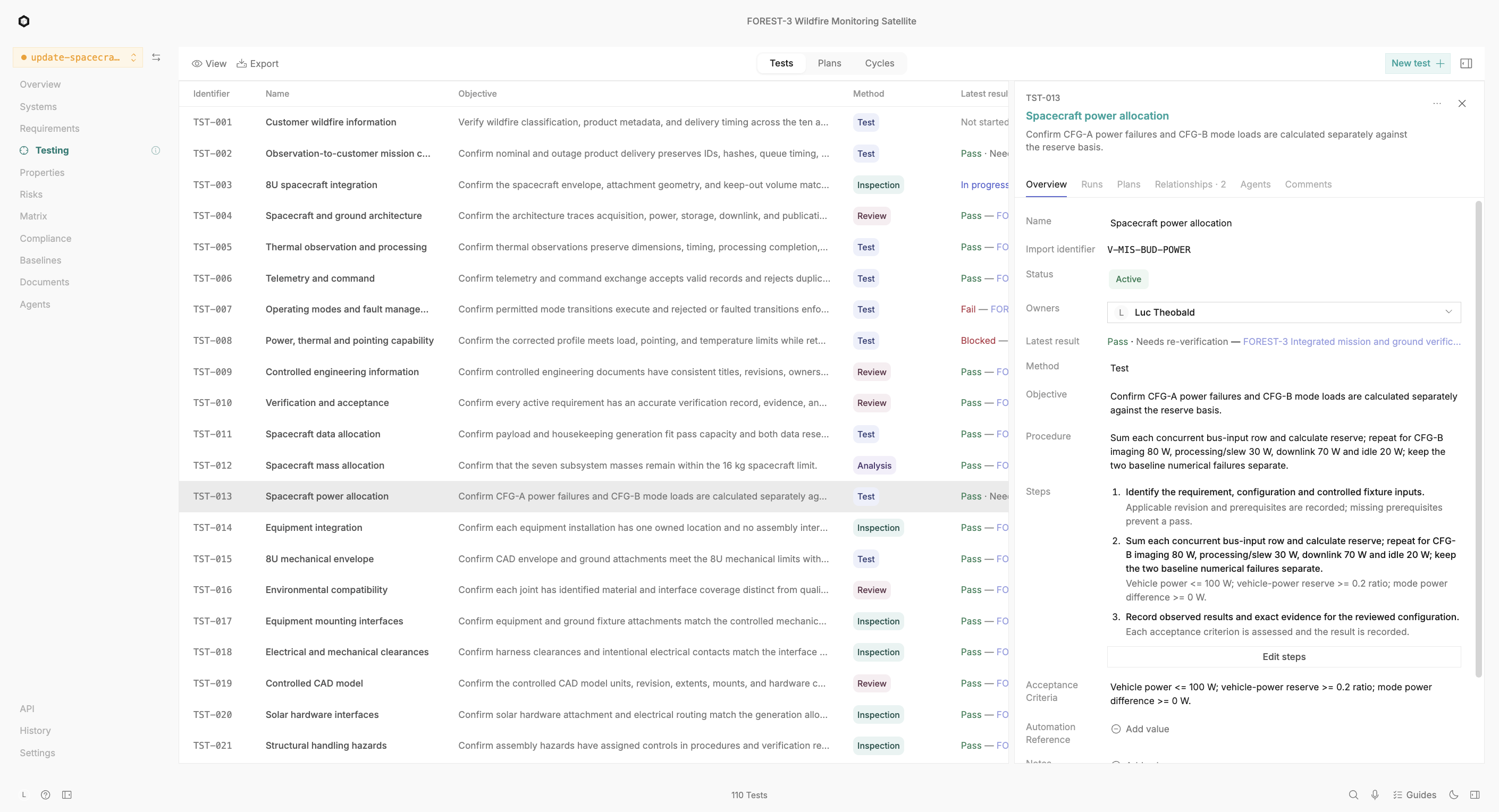
Arc FOREST-3 demo test record with a retained Pass marked Needs re-verification
Arc FOREST-3 demo. A retained Pass is marked Needs re-verification. The screenshot shows no rerun.

04

Keep obligations connected to the evidence.

Record the standards and regulations that apply to your technology, equipment, site and market. Keep the invoked edition, requirement owner and supporting evidence together.

Arc helps organise the requirements, review decisions and evidence behind your assessment. Your engineering and acceptance authorities determine applicability and compliance.

IEC references below use publisher scope summaries; full standard clauses were not reviewed. This is a starting map, not an exhaustive regulatory assessment.

IEC 61508-1:2010
Functional safety for electrical, electronic and programmable electronic safety-related systems. Determine the relevant sector standard and safety lifecycle for the application. Edition 2.0 · 30 April 2010 IEC publisher scope
IEC 61511-1:2016+AMD1:2017
Safety instrumented systems in the process industry. Record the invoked edition and the safety functions, lifecycle activities and evidence within scope. Edition 2.1 · 16 August 2017 IEC publisher scope
IEC 62619:2022
Safety requirements and tests for secondary lithium cells and batteries used in industrial applications, including stationary storage. This is not whole-site certification; application-specific standards may take precedence. Edition 2.0 · 24 May 2022 IEC publisher scope
GB Pressure Equipment (Safety) Regulations 2016
For in-scope equipment supplied in Great Britain with maximum allowable pressure above 0.5 bar, subject to exclusions and classification. Confirm the applicable design, manufacture and conformity-assessment route. Great Britain guidance · updated 24 March 2025 Government guidance HSE scope
Fusion facilities in Great Britain
Fusion facilities in Great Britain are overseen by HSE and the relevant environmental regulator. In England, this is the Environment Agency. Establish site-specific health, radiation and environmental permitting duties. England environmental guidance · published 14 September 2026 HSE fusion guidance England environmental guidance

Connect supplier, simulation and test references through the API.

Retain energy-system source revisions, supplier interfaces and simulation or test evidence references with their assessed configurations. Use supported API operations with agreed mappings, permissions and engineer review for the workflow.

Bring architecture, requirements, tests and supporting files. Arc’s import agent prepares a draft programme model for your team to review and finalise. Keep specialist simulation, telemetry and test execution with the tools responsible for those activities.

API
Connect supported records and evidence references through API operations. Agree mappings, permissions and engineer review for the workflow.
Deployment and AI keys
Discuss deployment in your own AWS or Azure infrastructure under an agreed setup. Bring your own key is available for supported AI providers. Agree access, processing locations and retention for the programme.

05

Frequently asked questions

Can Arc support fusion and other energy programmes?

Arc’s connected model can organise requirements, architecture, interfaces, risks and verification across energy hardware and software programmes. Define the system boundary, configuration and review responsibilities for your project.

How can Arc support a duty-cycle change review?

Trace the proposed operating conditions through thermal, electrical, mechanical and control requirements, supplier interfaces and verification work. Review changed demand, unchanged capacity and pending evidence with the responsible engineers before accepting the candidate configuration.

Does using Arc establish compliance with an energy standard?

Arc helps organise applicable requirements and evidence. Compliance depends on the technology, jurisdiction, invoked standards, implementation and responsible acceptance authority.

Can earlier energy-system evidence be reused?

Keep the requirement revision, procedure, assessed configuration and operating conditions with each result. The responsible engineer determines what the earlier evidence still supports and what needs further verification for the candidate design.

How can system and supplier teams keep a shared baseline?

Connect supplier source revisions, interface definitions and responsible owners to the system requirements. Review proposed work together on a branch, retain the accepted programme baseline and record the outstanding configuration and evidence decisions.

Can an agent approve an engineering change?

Agents prepare findings and proposed updates within configured permissions. The responsible engineers inspect the context, resolve open questions and approve what enters the accepted programme record.

Does Arc replace our simulation or test-data tools?

Arc connects engineering requirements, decisions and evidence references. Keep specialist simulation, telemetry and test execution in the tools responsible for those activities; review API mappings and permissions for supported connections.

What can an energy team review in an Arc demo?

A demo can follow an energy-system requirement through a supplier interface change, affected discipline records and verification-evidence review. Book a demo to discuss your programme’s requirements, operating conditions and commissioning decisions.

Move faster without compromising engineering rigour.

Bring a representative set of energy-system requirements, interfaces and verification work. Review how Arc fits your programme.